Featured Route
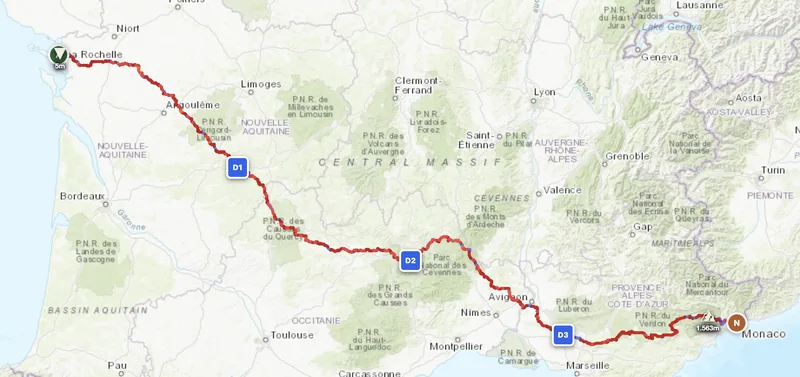
Why Adventure Riding in France
France is 644,000 km² — the largest country in Western Europe, with five distinct mountain systems and a population of 68 million that concentrates in Paris, Lyon and the Mediterranean coast. The interior is thinly settled and farmed with a long tradition of public access: the national network of chemins ruraux and chemins communaux — unpaved rural lanes — runs to hundreds of thousands of kilometres, and most of it is legally ridable on a registered, plated motorcycle.
The offroad geography comes in tiers. The Pyrénées and French Alps are the high-altitude game. The Massif Central in the middle of the country is a vast volcanic plateau, lower but wilder than either alpine range. The Cévennes and Languedoc hills to the south hold the classic schist-and-chestnut riding of the Occitanie region. And the Atlantic and Provençal coasts have sand and limestone tracks that ride well even in winter. Few countries pack this much range inside one border.
The Regions
Dense forestry road network up to 2,500 m and a handful of old military tracks pushing higher. The Queyras, Ubaye and southern Alpes-Maritimes hold the best-preserved offroad lines. Short season: July to mid-September above 2,000 m.
The offroad heart of France — 85,000 km² of low-traffic volcanic country with countless chemins ruraux. Cinder cones, lava plateaus, beech forest, cheese country. Climate is harsher than the name suggests; winters are long. May–October.
Dry-riding terrain: schist ridges in the Cévennes, Mediterranean scrubland (garrigue) across Provence, Corsican-style hillsides. Rideable nearly year-round except August wildfires. The longest offroad season of any French region.
When to Ride
The Pyrénées high routes open around mid-June — snow lingers on north-facing tracks well into May. The Alps are similar: lower forest tracks are rideable from April, but anything above 1,800 m is reliably clear only from late June. The Massif Central opens in May. Provence and the Cévennes ride from March through November. September is the universal sweet spot — cooler temperatures, dry trails, no summer traffic. October is still fine south of the Loire; the high routes close with the first serious snowfall, usually late October to mid-November. Summer fire bans restrict forest entry in the south (especially July–mid-September) on high-risk days.
How to Fit It Into Your Route
- → Atlantic-to-Mediterranean diagonal — the featured route above. 4 days across the full width of southern France on dirt. Easy to extend either end: add the Massif Armoricain in Brittany at the start, or push into Italy from the Alps at the finish.
- → Iberian loop: France → Spain → Portugal → France — drop through the Pyrénées, cross Spain on dirt, loop into the Portuguese interior, return via the Atlantic. 2–3 weeks for the full circuit. France is both the entry and exit of the classic Iberian offroad tour.
- → Full Alpine arc — chain the French Alps into the Italian Western Alps and Dolomites, then drop into Slovenia. Start near Geneva, finish at the Adriatic. 10–14 days of continuous high-Alpine gravel.
Practical
Mountain zones can have 60–80 km between stations. Fill up whenever you pass through a town of any size before entering the high sections. Rural stations often run automated-only after hours.
Euro. Cards accepted almost everywhere, though mountain gîtes and small rural bars often prefer cash. ATMs in every bourg.
EU and Schengen — open crossings with Spain, Andorra, Italy, Switzerland, Germany, Belgium. Switzerland requires a motorway vignette (backroads free). Andorra is non-EU for customs but Schengen-open for travel.
Gîtes ruraux and chambres d'hôtes run 60–90 EUR for two with breakfast. Mountain refuges are cheaper (35–55 EUR bunk + dinner) but book ahead June–September. Wild camping is restricted; a single night bivy above treeline is generally tolerated.
Strong in towns and on the plains; patchy in deep alpine valleys and the central Massif. Download offline maps and cache the day's track before leaving the valley. Emergency number is 112.
Unpaved chemins ruraux are legally open to registered motorcycles by default. Departmental prefectures can close specific routes seasonally (fire bans, park protection). Respect any "circulation interdite" signs. National parks generally forbid offroad riding in core zones.
Plan an offroad route in France
Set your start and end — GoraAdv routes you on chemins ruraux, forest service roads and Alpine gravel between them.
Open the Planner →