Featured Route
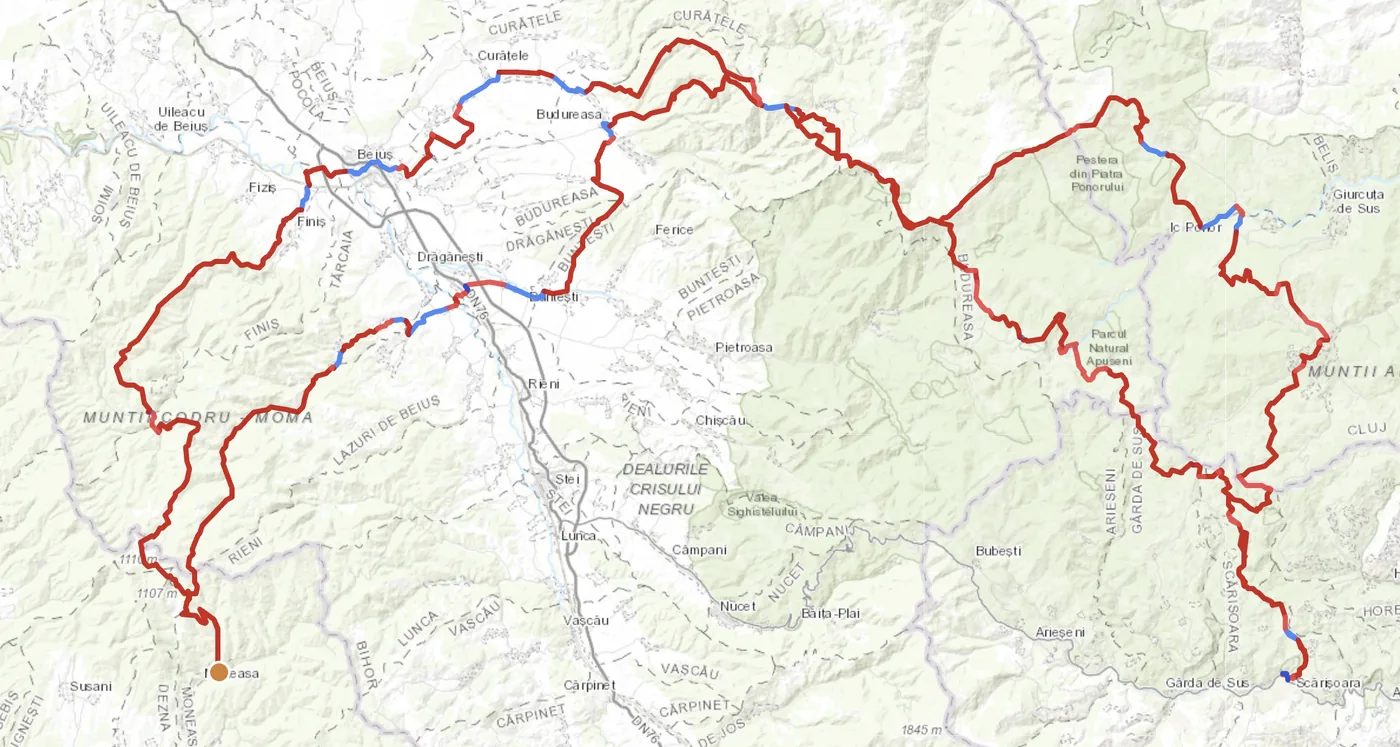
Why Adventure Riding in Romania
Romania holds the highest density of rideable mountain tracks in the GoraAdv set — the Carpathians form a natural horseshoe around the country, and the terrain between them is a maze of forest roads, ridge climbs and shepherd trails. What makes Romania special is the combination: altitude rivals the Alps, track quality is excellent for a Balkan country, and the human landscape feels genuinely remote — you pass through villages where motorcycles are rare, where people still farm and log by hand, and where the outside world feels genuinely distant.
The riding season is tight — high passes stay snow-locked until June and close again by October — but the window is concentrated and reliable. Summer weather is stable, tracks are firm, and the alpine meadows above 1,500m stay cool and comfortable. For riders seeking maximum offroad percentage with minimal paved tarmac, Romania is the answer: you can spend days without seeing a main road.
The Regions
The country's spine. Highest passes, most dramatic alpine terrain, most snow persistence. Includes the Transylvanian Alps (Meridionali), Fagaras and Piatra Craiului ranges. June–September only for high passes above 1,800m.
Central basin surrounded by mountains. Dense forest roads, rolling hills, and the broadest valley access. Lower altitude = longer season (May–October). Gateway between eastern and western Carpathian approaches.
Northwest ranges between Transylvania and Hungary. Less dramatic than the Carpathians but excellent forest networks. Karst landscape with caves and gorges. Good 4-season window (May through October, sometimes April).
When to Ride
May to October is the window. The high Carpathian passes above 1,800m can hold snow until mid-May and close again in October — the 5-day traverse should be treated as a June–September route. July and August bring thunderstorms in the afternoon on the high ground — start early. May and October are excellent for the lower routes: firm tracks, empty roads and the kind of light that makes Romanian mountain scenery look like a painting. Winter closes most of the dirt tracks and turns the forest roads to mud.
How to Fit It Into Your Route
- Romania loop through Transylvania. Enter from Hungary via the Apuseni, cross the Transylvania Plateau, climb into the Carpathian Alps via the Fagaras, and return via the southeast — a 5–7 day complete circuit.
- Hungary → Romania → Serbia mountain chain. Cross from central Europe south through the Carpathians and link to Serbia or Bulgaria — connecting three countries on the inner Balkan arc.
- Carpathian ridge-to-ridge traverse. Focus on the high passes and alpine meadows — a 3–4 day technical push starting in the north and crossing south through the country's highest peaks.
Practical
Gaps can reach 80–100 km in deep Carpathian sections. Fill up before entering any mountain corridor. Larger towns like Sibiu and Brașov are reliable refuel points.
Romania uses the Romanian Leu (RON), not euros. Carry cash for rural guesthouses and fuel stations — cards don't work everywhere in the mountains.
Borders with Hungary (EU), Serbia (non-EU), Bulgaria (EU) and Ukraine (non-EU). EU Schengen applies with Hungary and Bulgaria; passport control at Serbia and Ukraine borders.
Pensiuni (guesthouses) exist throughout the mountains with cheap, welcoming stays. Transylvania towns (Sibiu, Brașov, Cluj) have full hotel options. Wild camping: Romania holds Europe's largest brown bear population (~6,000). Keep food sealed and away from your tent, and avoid pitching near rubbish sites or on forest edges at dusk and dawn.
Good in valleys and towns, patchy in deep mountain gorges. Download offline maps before entering any Carpathian corridor.
Highlands stay 10–18°C in summer. Valleys reach 22–28°C. Nights above 1,500m can drop below freezing even in June. Afternoon thunderstorms are common July–August.
Plan an offroad route in Romania
Set your start and end — GoraAdv finds the most offroad line through the Carpathians. Adjust, calculate, export GPX.
Open the Planner →