Featured Route
Why Adventure Riding in Argentina
Argentina is the second-largest country in South America and arguably the original Pan-American motorcycle destination. The country runs nearly 4,000 km north-to-south — from the altiplano-edge of Jujuy on the Bolivian border to Tierra del Fuego at 55°S. The Andes form the western spine, the Atlantic the eastern coast, the Pampas fill the middle, and the dirt network is dense almost everywhere outside the largest cities. Ruta 40 — the legendary 5,194 km dirt-and-gravel highway running the Andean foothill corridor — is itself a multi-week ADV destination.
For ADV riders, Argentina is the most rideable big country in South America. Distances are real (Buenos Aires to Bariloche is 1,600 km), but fuel and accommodation are everywhere, the road network is dense, and the riding culture is strong (Argentines own and ride motorcycles in massive numbers). Caveats are economic — the peso inflation makes pricing fluid; carry USD cash for major transactions, exchange at the "blue dollar" rate where available. Plan around the right region for the right season: north Oct–May, centre year-round, Patagonia summer-only.
The Zones
The bucket-list zone. Ruta 40 runs Andean foothill gravel for 1,500 km from Mendoza south to Río Gallegos, paralleled by 1,000+ km of secondary tracks through the steppe. Lake district at Bariloche, Fitz Roy at El Chaltén, Tierra del Fuego at the bottom. Best Nov–Mar (austral summer); Apr is shoulder.
The western wine corridor with the high Andes behind. Mendoza vineyards, Aconcagua (6,961 m, highest in the Americas), the Talampaya canyon, Ischigualasto moonscape. Dense dirt network through the foothills connecting Sierras Pampeanas to the main Cordillera. Best Sep–May.
Argentina's ride-into-the-altiplano zone. Quebrada de Humahuaca, the Salinas Grandes salt flat, the Puna at 4,000+ m. Connects naturally to Bolivia (Villazón) or Chile (Paso Jama). Best May–Sep when summer rains ease and the altiplano is dry.
When to Ride
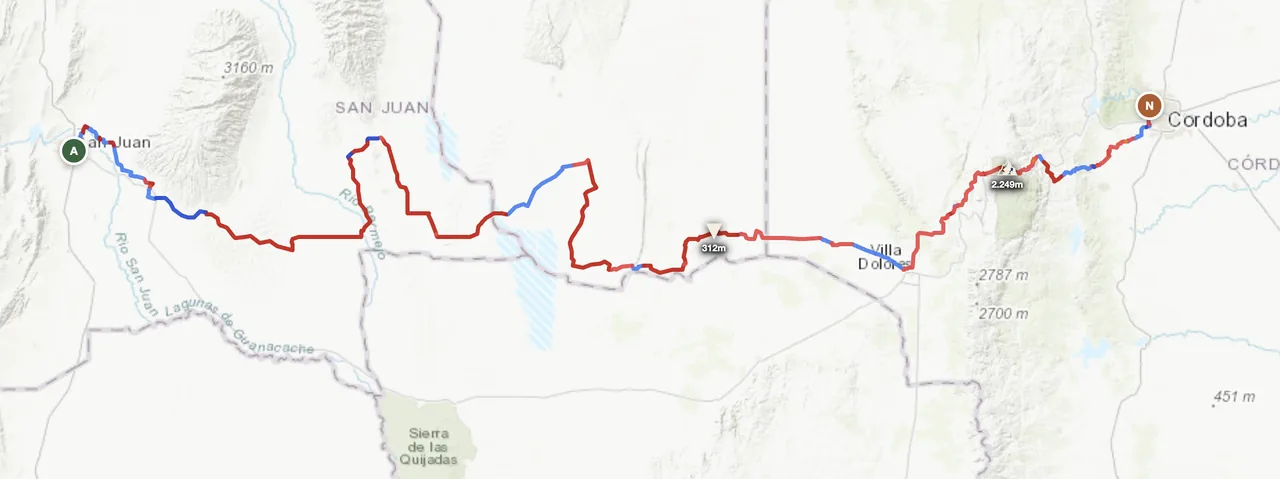
Argentina's riding seasons depend heavily on which region. The above grid reflects the central Cuyo–Sierras corridor (the featured route) — austral summer Oct–Apr is ideal, winter Jun–Aug brings sub-zero nights in the Sierras and snow in the high passes. Patagonia is even more seasonal: Nov–Mar only, the rest of the year is genuinely difficult or shut. The Norte (Salta, Jujuy) inverts: May–Sep is the dry window because summer rains flood the altiplano. Buenos Aires and the Pampas are year-round rideable but humid summers.
Regions to Plan Around
- →Ruta 40 south — Mendoza → Bariloche → El Chaltén → Río Gallegos. 14–21 day Patagonian dirt-gravel pilgrimage following Ruta 40. Best Nov–Mar.
- →Lake district loop — Bariloche as base, ride the seven-lake circuit and dirt connectors through Nahuel Huapi and Lanín national parks. 5–7 day shorter Patagonian taste. Best Dec–Mar.
- →Norte altiplano — Salta as base, ride Quebrada de Humahuaca, Salinas Grandes, the Puna roads connecting to Bolivia/Chile. 5–10 day high-altitude tour. Best May–Sep dry season.
Practical
Stations dense in the centre and Pampas; sparse on Ruta 40 south and the Norte altiplano. Patagonian sections can have 200–300 km gaps. Carry extra fuel for any Patagonia or Puna stretch.
Argentine peso (ARS) — high inflation, dual exchange rate. The "blue dollar" rate (informal) is significantly better than the official rate; use a service like Western Union to access it, or carry USD cash and exchange in Buenos Aires. Cards work but at the unfavourable official rate.
Visa-free for most western passport holders for 90 days. Vehicle import (TIP) at land borders. Land crossings with Chile (high-altitude passes Paso Jama, Pehuenche, Cardenal Samoré), Bolivia (La Quiaca/Villazón), Brazil (Iguazú, Paso de los Libres), Paraguay (Posadas), Uruguay (multiple) all open.
Hostales and posadas everywhere; estancias offer rider-friendly camping with secure parking in rural areas. Free camping common in Patagonia (with respect). Refugios in the Andean parks. Larger towns have proper hotels at modest prices.
Coverage strong in the centre and along major highways. Patagonia south of Bariloche has 100+ km gaps. Norte altiplano is patchy. Satellite messenger (Garmin inReach or similar) recommended for any solo Ruta 40 or Norte riding.
Patagonian wind is the actual hazard — 60–100 km/h gusts are normal in summer, can blow a stationary bike over. Andes nights freeze year-round at altitude. Pampas humid summer 30°C+. Norte altiplano sub-zero overnight. Pack layers and proper wind protection.
Plan a central Argentine traverse
Set your start in Mendoza or San Juan and end in Córdoba — GoraAdv routes you across the Cuyo foothills and Sierras Pampeanas, automatically.
Open the Planner →